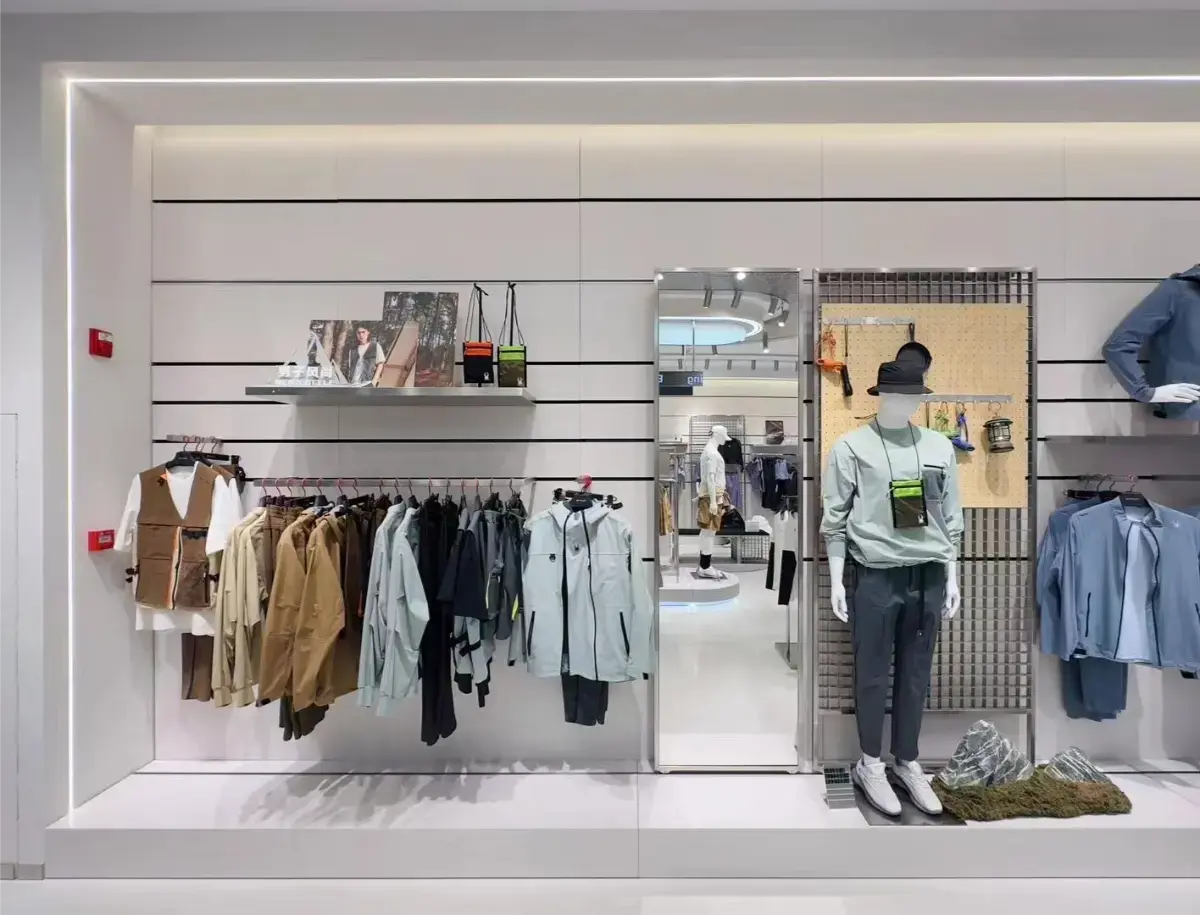
Every year, sportswear brand teams across Europe and North America find themselves in the same situation: they’re under pressure to roll out new store displays before peak season, they have a sourcing budget, and someone has found a Chinese manufacturer offering prices that seem too good to refuse.
Then the shipment arrives — wrong material finishes, inconsistent branding across pieces, packaging that couldn’t survive a container voyage, and a timeline that slipped by six weeks without explanation. The cost of the re-do frequently exceeds whatever was saved on the unit price.
This article is written from the perspective of a factory that has produced store fixtures and mannequins for ARC’TERYX, Salomon, Allbirds, and other sportswear brands. We want to give real answers to the questions serious brand teams actually ask — because the buyers who get the best outcomes are the ones who ask the questions that reveal the most.
Why the Lowest Price Is Usually the Most Expensive Option
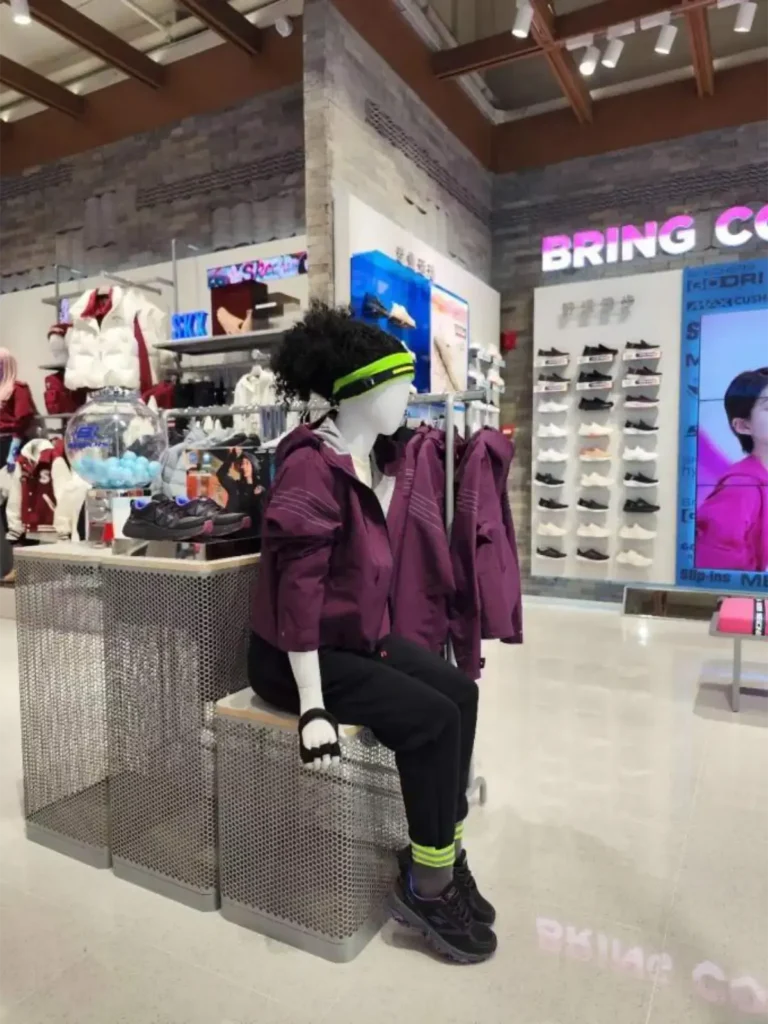
In sportswear retail, the display fixture is the frame that either elevates or undermines the product. A premium running shoe displayed on a generic gondola shelf tells a different story than the same shoe on a fixture designed to mirror the brand’s in-store experience language.
The factories that win on price alone are typically doing so by reducing variables the buyer hasn’t specified: using thinner-gauge steel than the load specification requires, substituting a generic powder coat color for the exact RAL match the brand approved, or omitting the internal reinforcement that prevents the fixture from shifting during shipping.
These reductions don’t show up as defects in the sample. They show up under load, in transit, or in the third month of a product’s in-store life when the fixture begins to sag or discolor.
The factories worth building a relationship with are the ones that push back on vague specifications — not the ones that say yes to everything.
What Actually Differentiates a Factory from a Trading Company
The single most reliable signal in sportswear store fixture sourcing is this: can the supplier give you a manufacturing scope that matches what you’re actually ordering?
A factory with a genuine in-house production capability will have equipment on-site: laser cutting, CNC bending, welding, painting or powder coating, assembly. They will have employees, not just contractors. They will be able to show you photos of their production floor, not just a catalog.
A trading company sources from multiple factories and adds a margin. They are useful for commodity products. For a custom sportswear display program where branding consistency, material specification, and timeline reliability are non-negotiable, a trading company structure introduces unnecessary risk at every handoff.
What to Ask Before Signing a Store Fixture Contract
1. Can you show me your production facility?
A genuine factory will offer a video call or on-site visit without hesitation. They should be able to show you their metalworking section, their paint or coating line, and their assembly area. If the response to this request is a generic showroom or stock photos, keep looking.
2. What is your in-house capability versus outsourced?
The factories that produce the most consistent sportswear store fixtures are the ones that do their own welding, their own finishing, and their own assembly — with their own employees, on their own floor. Outsourcing any of these steps introduces a quality control gap between you and the person actually making your fixture.
3. What are your quality control checkpoints?
Experienced factories run quality checks at three stages: incoming material inspection, in-process inspection during fabrication, and final inspection before packing. Ask to see their QC documentation format. Any factory worth working with will have a standard QC checklist they complete for each order.
4. How do you handle material specification compliance?
For sportswear brands, material specification is critical. Steel gauge, paint type, load capacity ratings, and fire retardancy standards all need to be documented and verifiable. The right factory will maintain material certificates and be able to provide test reports for relevant standards in your destination market.
5. What does your packaging specification look like for international shipping?
Store fixtures are heavy, irregularly shaped, and typically shipped flat-pack or partially assembled. The packaging specification determines whether your fixtures arrive intact. Ask specifically about internal protection, moisture resistance for sea freight, and container loading methods (not stacked — always stood or braced).
What a Sportswear Store Fixture Production Timeline Actually Looks Like
From design sign-off to container loading, a well-managed sportswear store fixture project runs 10–14 weeks, depending on complexity and order size:
- Week 1–2: Design confirmation, material specification, structural engineering review (if custom), and quote lock.
- Week 3–4: Prototype or first-off sample production. For custom fixtures, this is when you see the actual piece for the first time. Review and approve before mass production begins.
- Week 5–8: Mass production. Expect weekly photo updates showing production progress, not just a “production is underway” email.
- Week 9–10: Quality inspection against the approved sample. Individual piece check, load test if applicable, dimensional verification.
- Week 11–12: Packaging to specification, export documentation, container loading, and dispatch.
Any factory that promises delivery in 4–6 weeks for a custom sportswear display program is either not running genuine production or is pushing your order to the front of the queue at the cost of another customer’s timeline.
Red Flags to Watch For in Sportswear Fixture Sourcing
- Prices that arrive before you’ve shared full specifications
- Reluctance to provide references from sportswear or activewear brands
- Inability to explain their in-house versus outsourced production process
- No sample or first-off inspection before mass production begins
- Vague answers to questions about packaging for international shipping
- Response times that exceed 48 hours during the sales process (this predicts communication quality during production)
What Serious Sportswear Brands Ask for Beyond the Fixture
Brand teams that consistently get better outcomes also request: CAD drawings for their store planning teams, installation instructions in their preferred format, spare parts packages for high-wear components, and documentation packages for facilities management teams in each market.
These aren’t extras. They’re the difference between a fixture program that works smoothly in rollout and one that creates reactive firefighting at every store opening.
Frequently Asked Questions
What is the typical lead time for custom sportswear store fixtures from China?
From design sign-off to container loading, expect 10–14 weeks for a custom sportswear store fixture program. This includes prototype approval (3–4 weeks), mass production (4–6 weeks), quality inspection (1–2 weeks), and export packing and logistics (1–2 weeks). Build this timeline into your store opening plan from the beginning.
What is the minimum order quantity for custom store fixtures?
Minimum order quantities for custom sportswear store fixtures typically start at 20–50 pieces per design, depending on the complexity of fabrication and whether tooling is required. Standard or modified-standard fixtures may be available in smaller quantities at higher unit costs. Discuss your specific requirements with a factory to get accurate MOQ information.
How do I verify a Chinese store fixture factory’s quality management system?
Ask for documentation of their quality management system — ideally ISO 9001 or equivalent. Request photos and reports from previous projects in your category. Ask for a video call that shows their actual production floor. For significant orders, commission a third-party inspection through a company like QIMA or Bureau Veritas to verify compliance at the production and pre-shipment stages.
What materials are used in sportswear store fixtures?
The most common materials for sportswear store fixtures are steel (tubular or sheet, typically powder-coated), wood and wood composites (for shelving and display tables), acrylic and other polymers (for branding elements and transparent displays), and combinations of these. The specification should be agreed upon before production begins based on load requirements, brand aesthetic, and destination market conditions.
Can I get 3D renders or CAD drawings before production?
Yes — and any factory worth working with will provide CAD drawings and 3D renders as part of their design development process before you commit to production. These drawings serve double duty: they let your store planning team verify fit and layout, and they provide the manufacturing specification that the factory works to. Make sure your contract specifies that renders and drawings are part of the deliverable package before you sign.
Final Thoughts
Sourcing sportswear store fixtures from China is not inherently risky. The risk comes from buyers entering the process without understanding what they should be verifying, and from factories that are optimized for volume rather than for brand program reliability.
If you’re evaluating suppliers for a sportswear store fixture program and want a direct conversation about your project requirements, we’re available for a no-obligation consultation. Tell us what you’re trying to build, and we’ll tell you honestly whether we’re the right fit — and if we’re not, we’ll tell you who might be.
Morshopfitting has produced store fixtures and mannequins for international sportswear and activewear brands from its manufacturing facility in Tongxiang, Zhejiang Province. Contact our team to discuss your next store fixture program.
Internal Links & Resources
Browse Related Products on Alibaba: View our full store fixture product range on Alibaba — production examples and current pricing
Mannequin Display Solutions: For mannequin display solutions for your retail brand, visit Richelannequin — mannequin manufacturer for MAMMUT, lululemon, ARC’TERYX, and more
Learn More About Our Factory: About Morshopfitting — 20 years manufacturing store fixtures in Tongxiang, China